Showing posts with label GPS receiver. Show all posts

GPS Cellular Phone

Many cell phone companies are starting to integrate GPS technology into their programming systems, so it might be advantageous for you to look at a GPS cellular phone so you can integrate the GPS system that is in your vehicle with your cell phone and synchronize the two of them together for maximum potential.  Essentially, what you need with your GPS system in order to make it work with your cell phone is a software program that will send the GPS signals to your cell phone and allow you to read the GPS signal by just looking at your cell phone.

There are a lot of GPS cellular phones available on the market today.  Cell phone carriers are getting on board with GPS technology and realizing that their customers want the ability to utilize GPS information right from their cell phones.  That is an amazing development when it comes to cellular providers.  Way “back in the day”, all you could do was have a cell phone installed into your car.  Handheld phones were known as brick phones.  But today, we have flip phones, little itty bitty “barbie” phones, and Bluetooth technology that lets us connect to the world without cables and easier than ever.

It only makes sense that cell phone companies would start providing their customers with a

GPS cellular phone to help them with navigation problems – or solutions!  Now that we have the iPhone, this technology has gone even a step further as this new amazing device does everything but cook your dinner for you.  But the iPhone really does integrate GPS technology making it a true GPS cellular phone.

When you have a GPS device in your vehicle, it sends a signal to the satellites that are up in space that can pinpoint your location.  With special software, you can make your cell phone into a portable GPS system and you can keep track of your movements and know where you need to go without having to have any special equipment.  A GPS cellular phone is a great way to make a simple piece of equipment that you use everyday into something new that you will be able to use whenever you need it!

If you have a GPS system in your vehicle, check to see if you have a GPS cellular phone that will be compatible with your existing phone service.  If not, ask your cellular carrier if you can upgrade your phone to make it GPS compatible and explore all of the options that will be open to you when you get a GPS cellular phone!

image

GPS Fish Finder

A long time ago, an enterprising inventor made the first fish finder to locate fish under the water while fishing.  Now that we have new technologies, you can get a GPS fish finder that will improve accuracy in locating the big fish.  If you have ever been frustrated while fishing knowing that the big fish are close by, but you just can’t get them to bite, a GPS fish finder can be a great tool in bagging the big one!

Fishing is more fun when you are catching fish than trying to find them. The latest technology means that you can use sonar and GPS technology whether you are a weekend hobbyist or a tournament angler, in fresh water or on a boat out in salt water.  Utilizing a GPS fish finder can certainly help you locate schools of fish and where you need to cast so that you can catch them!

The way a GPS fish finder works is it using GPS technology to pinpoint your location on the water.  A signal is sent out from your GPS fish finder and it is locked into three or four of the satellites that orbit the earth to show exactly where you are.  That signal is then sent back to the fish finder which produces a 3d image of the bottom of the body of water you are on.  Once you have that 3d image locked in, the images of the fish will appear on your screen and you will be able to cast where they are.

Of course, a GPS fish finder is going to be a handheld unit, but it will have the same strength and accuracy as any other GPS unit.  It will have an LCD screen where you can view your images and calculate the depth of the body of water you are on.  It can show you where excessive undergrowth is at so you can steer clear of that and be able to pinpoint where the biggest fish are.

If you like to participate in fishing tournaments, you may want to check before you start if they allow you to use a GPS fish finder.  Most tournaments look at these devices as an unfair advantage so they will not usually allow them, but some do, so be sure to ask lest you become disqualified.

For the amateur or professional angler, using a GPS fish finder can make the sport of fishing a lot of fun.  Find a unit that will meet your needs and cast away!


Pict Source

Bluetooth GPS

One of the biggest advancements in technology is not only blue tooth, but also the addition of blue tooth GPS to the blue tooth system.  Blue tooth technology is exciting for many people as it seamlessly and wirelessly connects all sorts of different electronic components such as a PDA and cell phone – all without the use of cables.  Now, you can have a blue tooth GPS system connected as well.

Basically, what blue tooth GPS does is take the GPS device and sends a signal to your blue tooth wireless laptop or your PDA.  The device is mounted inside or outside the vehicle and assures that you will be able to get where you are going without having a lot of cables and wires to deal with.  You load in detailed maps and navigation software, connect wirelessly to the GPS device and you are ready to go!

The navigation software that comes with blue tooth GPS makes getting places easier than ever. All you do is enter the place you want to go and the navigation software gives you turn-by-turn directions and voice prompts you to your destination.  If you get off course, the blue tooth GPS software will re-calculate your route automatically and get you back on track.  Many of the blue tooth GPS systems also offer detailed street maps and points of interest along the way such as restaurants, hotels, gas stations, and attractions.

The wireless GPS receiver can transmit signals to your device up to thirty feet away with blue tooth technology.  That is why having a blue tooth GPS system is so advantageous when on trips to places you are not sure of how to get from point A to point B.

It seems like we are hearing more and more about blue tooth technology, so it is only natural that a blue tooth GPS unit was bound to come out eventually.  People have blue tooth phones, PDAs, and personal organizers, so why not also have a blue tooth GPS system too?  It is a natural progression and has helped revolutionize the travel industry.  Plus, it can not only give you directions, but it can keep track of your vehicle too if you are not driving it.  Parents of new drivers love this and more and more are buying blue tooth GPS systems to install in their teens’ vehicles so they know where their children are at all times.


Pict Source

Bluetooth GPS Receiver

Blue tooth technology is the newest thing to hit the electronics industry, and it only goes to follow that manufacturers would strive to invent a blue tooth GPS receiver to add to our ever growing cache of electronic equipment.  The way blue tooth technology works is based on the concept of no wires.  It seamlessly connects things like a cell phone and a PDA without having to mess around with pesky wires.

A blue tooth GPS receiver basically turns your PDA into a GPS receiver.  This is not a new concept, but previously, in order to do this, you would have to have a compact flash slot or some other type of cabling configuration to attach the transformation add-on device and the PDA together.  However, now thanks to blue tooth technology, you can easily convert your cell phone or your PDA to a GPS receiver without any special cabling needs.

Making your PDA into a blue tooth GPS receiver is easy now that we have wireless technology that does not hinder our mobility or ease of use.  All you need is an expansion slot for a memory card that will hold your maps for you and not take up valuable space on your unit.  Bluetooth technology really pays off when using these devices as vehicle navigation aids. Wireless connectivity allows you to place the GPS receiver in a spot that has a clear view of the sky,while the PDA can be held or mounted for optimal screen visibility and easy access to menu screens.

When making your PDA into a blue tooth GPS receiver, ideally, it is a great advantage to have it already be GPS capable.  That way, your compact flash slot is left free to hold additional information such as maps that include not only directions, but points of interest as well.  Points of interest include hotels, restaurants, gas stations, and attractions for the places you will be visiting.  If your PDA is not capable of becoming a blue tooth GPS receiver, you can buy an adapter that will go into your flash drive or other expansion slot and make it able to be used as a navigation aid.

We have a lot of electronic gadgets we use today that make our life easier – well at least that is what most people think.  It only makes sense that we try to get as many uses out of these gadgets as possible which is why making your PDA into a blue tooth GPS receiver is a very good idea.  It is one less gadget to haul around!

Pict Source

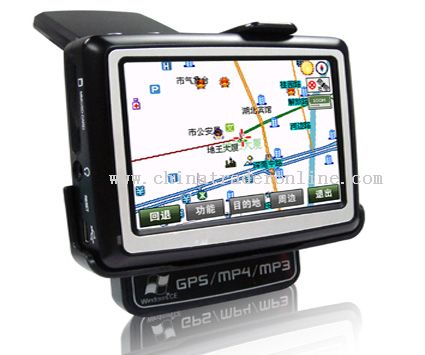
GPS Receiver

When group utter about a GPS system, they are ordinarily talking virtually the GPS system. The GPS receiver is the endeavor of the complete system that receives the signal that is sent directly from the satellites to nail your location and get you to your pre-programmed direction. The device is usually mounted on the dashboard of the car or with a suction cup to the screen. It has a registering cover that instrument present you the line to go and several GPS receivers verbalize phonation cues to get you along the path.

The undivided Planetary Orientating Method is a conglomeration of 27 satellites circling the Location at a unflagging measure.  Bill digit of them are old to change signals sent out by the GPS receiver and terzetto are used as back-ups in container among the otherwise ones malfunctions or becomes unserviceable.  The job of the GPS system is to find digit or solon of these satellites, figure out the indifference to apiece, and use this data to be processed to its own emplacement. This operation is supported on a unsubdivided mathematical prescript titled trilateration.


Trilateration fundamentally is find ternary different points surrounding you and so putting you in the region of it.  There is a little source to it, but that is the principal concept.  When the GPS acquirer sends out its signalize and perfects it on quaternity or encoder of the GPS orbiters, it then searches approximately you to uncovering these terzetto points and derives exactly wherever you are supported on those trinity points.

There are three kinds of GPS receivers.  The position form - as mentioned previously - is the variety that is mounted inner your car.  Most of them are easily similar between vehicles because of the suction strengthener cups that numerous GPS receivers use.  Added typewrite of GPS fiduciary is a takeout assemblage held gimmick that you can endure with you.  These are uppercase for use in fair activities such as hiking, biking, and fishing.  The third variety of GPS headphone is one that is used for tailing intentions.  This type of GPS set is usually mounted inside the object either on its bottom carriage or low-level the midsection that's inconspicuous to the bearer.

The way a GPS receiving system works is actually a bit more complicated than cited above, but you get the total gist, right?  The communication that is dispatched out from the GPS receiver does so automatically when the unit is supercharged up and when you arrange it in your intended direction.  From there, what follows is awesome!

How Does GPS Work?

When people talk about "a GPS," they usually mean a GPS receiver. The Global Positioning System (GPS) is actually a constellation of 27 Earth-orbiting satellites (24 in operation and three extras in case one fails). As we said in the section above, the U.S. military developed and implemented this satellite network as a military navigation system, but soon opened it up to everybody else.

Each of these 3,000- to 4,000-pound solar-powered satellites circles the globe at about 12,000 miles (19,300 km), making two complete rotations every day. The orbits are arranged so that at any time, anywhere on Earth, there are at least four satellites "visible" in the sky.

A GPS receiver's job is to locate four or more of these satellites, figure out the distance to each, and use this information to deduce its own location. This operation is based on a simple mathematical principle called trilateration. Trilateration in three-dimensional space can be a little tricky, so we'll start with an explanation of simple two-dimensional trilateration.

Imagine you are somewhere in the United States and you are TOTALLY lost -- for whatever reason, you have absolutely no clue where you are. You find a friendly local and ask, "Where am I?" He says, "You are 625 miles from Boise, Idaho."   This is a nice, hard fact, but it is not particularly useful by itself. You could be anywhere on a circle around Boise that has a radius of
625 miles.

You ask somebody else where you are, and she says, "You are 690 miles from Minneapolis, Minnesota.”  Now you're getting somewhere. If you combine this information with the Boise information, you have two circles that intersect. You now know that you must be at one of these two intersection points, if you are 625 miles from Boise and 690 miles from Minneapolis.

If a third person tells you that you are 615 miles from Tucson, Arizona, you can eliminate one of the possibilities, because the third circle will only intersect with one of these points. You now know exactly where you are – Denver, Colorado.

This same concept works in three-dimensional space, as well, but you're dealing with spheres instead of circles.  Fundamentally, three-dimensional trilateration isn't much different from two- dimensional trilateration, but it's a little trickier to visualize. Imagine the radii from the previous examples going off in all directions. So instead of a series of circles, you get a series of spheres.